-
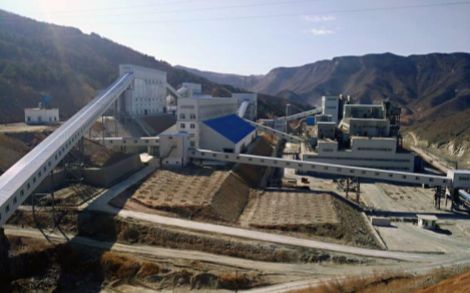
What Is a Belt Conveyor? Working Principle & Key Components
A belt conveyor is an industrial bulk material handling equipment that takes the conveyor belt as the core for bearing and traction, and achieves continuous and circular operation by means of friction drive. It serves as the fundamental core equipment for efficient, low-cost and eco-friendly transshipment of bulk materials in mining, coal, cement, ports, metallurgy, chemical industry, thermal powe… -
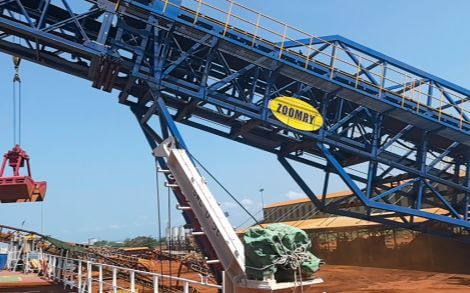
Capesize Heavy Duty Shiploader for Marine Sand and Aggregates
In the transoceanic shipping of marine sand and construction aggregates, 80,000-120,000 DWT Capesize bulk carriers have become the core capacity carrier for intercontinental sand and gravel trade. For a long time, however, heavy-duty ship loading equipment compatible with Capesize vessels has always been a core pain point in the industry. Conventional shiploaders have insufficient operating radius… -
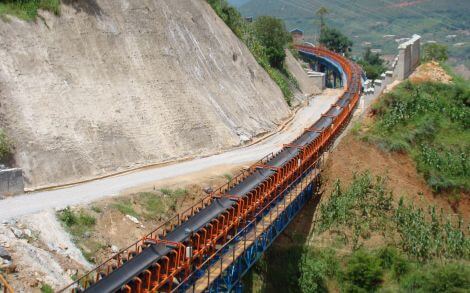
FAQs on Belt Conveyors and Bulk Material Handling Equipment (Issue 4)
Following the widespread industry attention garnered by the first three installments of our FAQs, in this issue we focus on the core pain points including the selection, design, intelligent upgrading and special working condition adaptation of belt conveyors and their associated auxiliary equipment. Combining ZOOMRY's years of practical experience in international projects, we provide professional… -

ZOOMRY 3500TPH Heavy-Duty Hopper Feeder Conveyor
With the acceleration of the global industrialization process, the trade volume of bulk commodities continues to rise. According to the data in 2025 Global Bulk Carrier Transportation Market Blue Book, the global bulk carrier transportation volume reached 4.5 billion tons in 2025, a year-on-year increase of 3.2%. This puts forward higher requirements for the capacity, reliability and adaptability … -

Core FAQs on Belt Conveyors (Issue 3)
In the design and operation of bulk material handling systems, whether for new projects or retrofits, customers face a series of specific and critical technical and commercial decisions. Drawing on global project experience, ZOOMRY has compiled the most concerned questions about belt conveyors into a series of FAQs, providing you with clear, professional guidance with an international perspective.… -

Integrated Solution for Port Bulk Material Handling: Truck Unloader + Hopper Feeder + Mobile Shiploader
Bulk material handling scenarios in global ports share common characteristics such as diverse material types, large throughput fluctuations, limited operating space, and stringent environmental requirements. Under traditional models, problems such as manual guidance-dependent truck unloading, frequent blockages in the feeding process, material segregation and pollution during shipping are prevalen… -

Frequently Asked Questions about Belt Conveyors (Part 2)
ZOOMRY has deep expertise in the global bulk material handling equipment industry, with products covering core equipment such as belt conveyors and telescopic stackers, as well as components including idlers and rollers. Drawing on practical experience from domestic and international projects, we provide professional and actionable suggestions for high-frequency industry questions. A FAQ table is … -

Technical FAQs on Belt Conveyor and Related Equipment
ZOOMRY has been deeply engaged in the bulk material handling equipment industry for many years, focusing on the R&D and production of complete sets of equipment such as belt conveyors, telescopic stackers, mobile ship loaders, and truck unloaders, as well as core components including idlers, rollers, and cleaning scrapers. Combining rich practical experience in serving global customers and interna… -
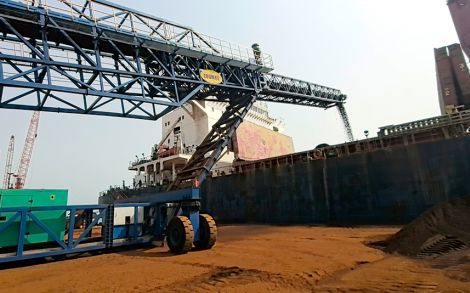
2025 Mainstream Bulk Material Handling Equipment for Ports - Mobile Ship Loaders
Port operations in 2025 have entered an era of "multi-dimensional efficiency competition". Traditional large-capacity bulk material handling equipment (fixed ship loaders, dump trucks + fixed conveyor lines, etc.) struggle to meet new demands due to inherent limitations: Fixed ship loaders are restricted by concrete foundations and track layouts, making cross-berth operations impossible. If por…
 ZOOMRY
ZOOMRY
Engaged in conveyor system field more than two decades.